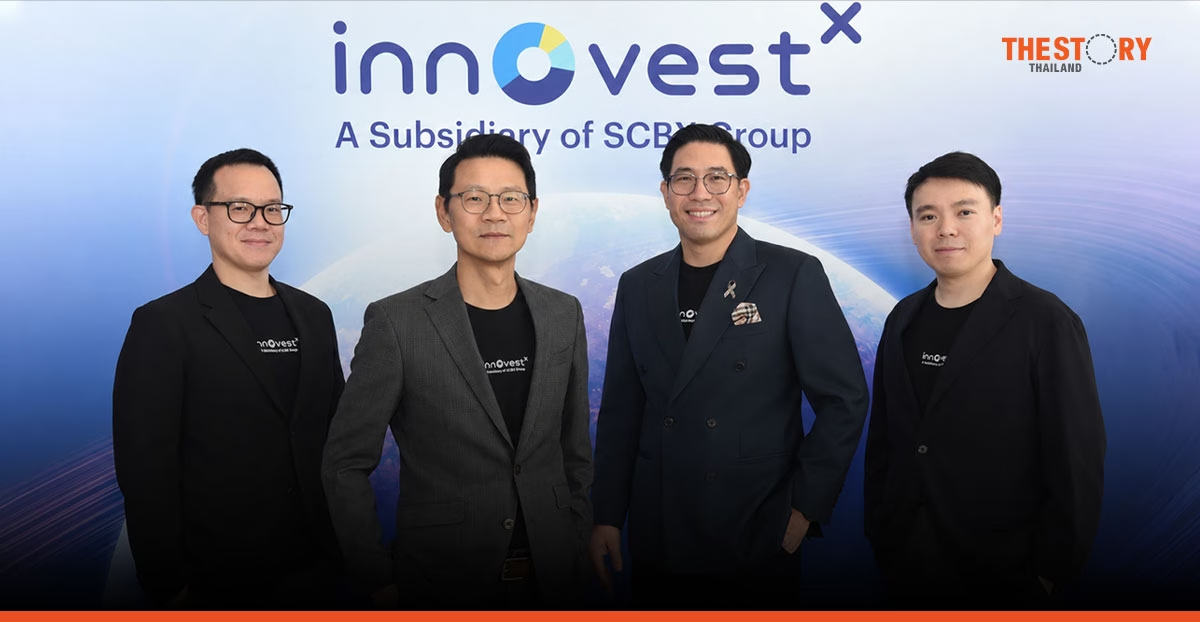
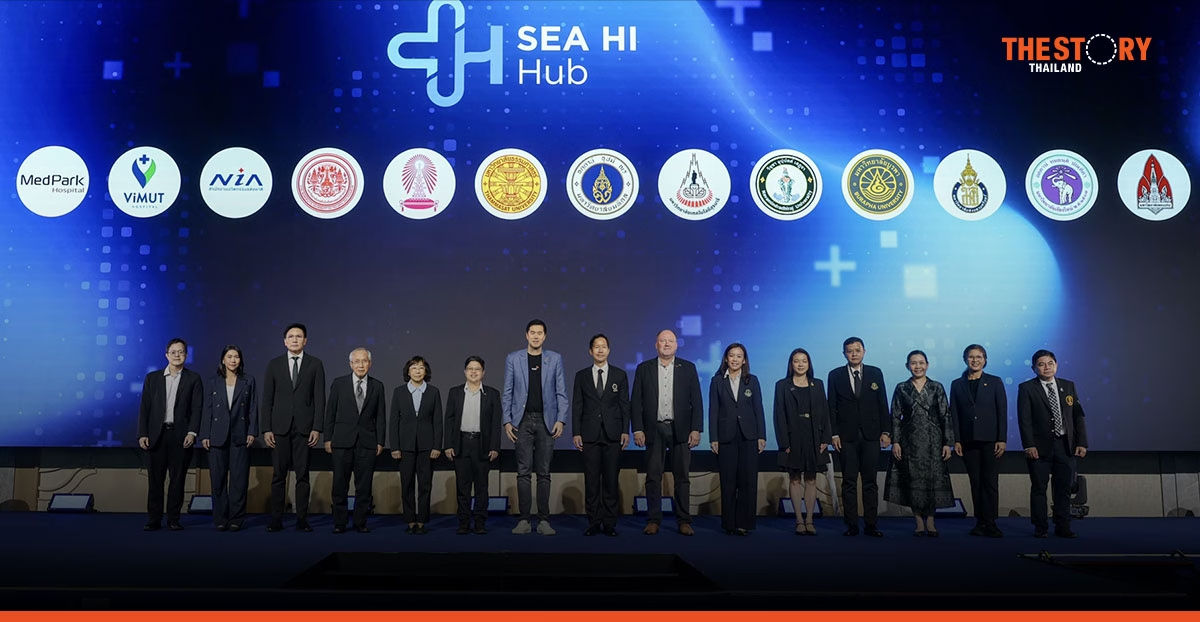
At the SEA Health Summit 2026, held under the theme “AI in Health and Longevity,” the SEA Health Innovation Hub (SEA HI Hub)—a non-profit platform initiated by RISE and SeaX Ventures—signed a Memorandum of Understanding (MOU) with a coalition of medical schools, academic medical centers, hospitals, and private healthcare operators in Thailand to establish a regional health innovation ecosystem.
The non-profit platform aims to position Southeast Asia as a global destination for health innovation. SEA HI Hub acts as a connective tissue linking global innovators with the regional healthcare ecosystem, including investors, universities, hospitals, regulators, corporations, and government agencies, to accelerate the transition from scientific discovery to patient care.
The initiative operates on four strategic pillars designed to transition health research into real-world applications:
- Clinical Access: Utilizing a partner hospital network across Southeast Asia for clinical trials, real-world data generation, and regulatory evidence at a lower cost than comparable studies in the United States.
- Capital: Connecting global health startups and technologies with deep tech venture partners and investors.
- Regulatory Fast-Track: Supporting health innovation through regulatory sandbox pathways and accelerated approval mechanisms at national and regional levels.
- Market Access: Providing go-to-market support, commercial partnerships, distribution channels, and strategic connections across the region.
These four pillars function as a commercialization engine to develop, clinically validate, and scale health innovations across Southeast Asia and global markets, moving beyond conventional academic collaborations.

Dr. Kid Parchariyanon, Founder of SEA HI Hub, stated that the agreement marks a unified effort by Thailand’s universities, hospitals, and private sector to transform the country from a treatment destination into a creator of medical innovation. He noted that Thailand offers world-class JCI-accredited hospitals, internationally recognized researchers, and clinical trial costs that are 3 to 5 times lower than the United States, with SEA HI Hub serving as the missing connector.
The current partner network includes Mahidol University, Chulalongkorn University, Thammasat University, Chiang Mai University, Khon Kaen University, King Mongkut’s University of Technology Thonburi, Prince of Songkla University, Burapha University, Naresuan University, Navamindradhiraj University, Suranaree University, the National Innovation Agency (NIA), the Technology and Innovation in Life Sciences National Agency (TILSNA), Bangkok Dusit Medical Services (BDMS), Phyathai Paolo Group, Bumrungrad Hospital, MedPark Hospital Group, ViMUT Hospital, Meditop, Medeze Group, CareMore Plus, and Nova Health. The alliance spans public and private systems across all major regions of Thailand.
The initiative serves as a long-term economic strategy for the region rather than a public health agenda alone. Positioning Southeast Asia as a preferred destination for clinical development, health technology deployment, and medical innovation aims to drive investment, job creation, talent acquisition, and improved healthcare quality, making the region a hub where global investors, researchers, and entrepreneurs choose to build.
The initial MOU signings form the foundation of the project. SEA HI Hub is currently in discussions with strategic partners in Singapore, Malaysia, Indonesia, and the Philippines, with onboarding expected to accelerate in the second half of 2026. The regional network aims to scale its reach to 100 million patients within three years.
Dr. Kid Parchariyanon concluded that the initiative aims to build a globally competitive health innovation economy through a structured roadmap.
SCBX Group secures five AI research paper acceptances across four elite global conferences
IBM unveils World’s First Sub-1 Nanometer Chip Technology