Will AI take our jobs?
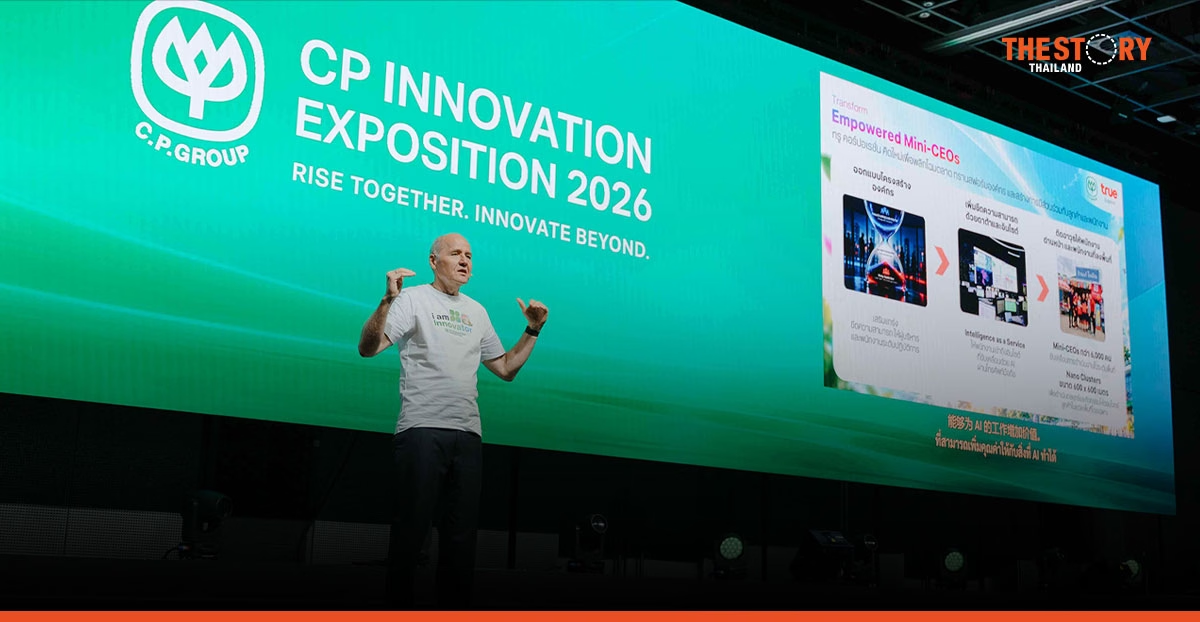
I asked this question at the CP Innovation Exposition and Symposium 2026. About 30% of participants believed AI would eventually take over their work. While most disagreed, the concern of nearly one in three people deserves attention.
But focusing only on jobs that AI might replace misses a bigger change. As AI expands what people can do, businesses need to rethink how they divide work, allocate resources and make decisions.
When Capabilities Change, Organizations Must Adapt
The labor market is already changing. According to the Thailand Development Research Institute, AI-related job postings in Thailand rose 31% in the year to mid-2025. LinkedIn reports around 1.3 million new AI-related jobs worldwide over the past two years.
Existing jobs are changing too. OpenAI’s Work at the Frontier research analyzed more than 800,000 work-related ChatGPT messages from U.S. users. Among messages involving occupation-specific tasks, 43.5% concerned work normally associated with another occupation. This suggests AI is helping people access knowledge and tools that once required specialists, allowing them to take on a wider range of tasks. Human expertise and judgment remain essential, particularly for complex work.
This matters because most organizations were designed around clearly defined roles and departments. Information and expertise were often concentrated in particular teams, while managers coordinated work and passed decisions up the hierarchy.
As AI makes information more accessible and helps employees work across functions, companies have reason to rethink those structures.
I do not believe the future is an organization run by a few executives and thousands of AI agents. We will still need young people who understand AI working alongside experienced colleagues who bring business knowledge and judgment.
Organizations may become flatter, but the goal should not be to eliminate middle management. It should be to reconsider what each role contributes when AI can handle more routine analysis and coordination.
At True, we are already exploring this approach. We are developing a business intelligence system that combines data on sales, revenue, costs and network performance, with AI helping turn that information into practical recommendations.
The aim is to make these insights available to employees close to customers, rather than keeping them mainly at headquarters.
Our Nano Cluster model is one example. We have divided Thailand into around 6,000 local market areas, each with its own targets and budget. Local managers can access customer, competitor and performance data, supported by AI recommendations, to make decisions based on conditions in their areas.
This gives people closer to customers more authority to act, without waiting for every decision to move through headquarters. It also changes how the organization distributes information, responsibility and decision-making power.
Using AI to Create New Value
In another poll, I asked participants where AI could give businesses the greatest advantage. Some 58% chose efficiency and productivity, 20% better decisions, 12% new business opportunities and 10% customer experience.
These results suggest that many businesses still see AI mainly as a tool for improving existing operations. Efficiency matters, but doing the same things faster is not enough to secure future growth.
Consider the watch industry. Traditional watchmakers spent decades improving accuracy and durability. Then technology companies introduced smartwatches, turning devices that told the time into tools for monitoring health and accessing digital services.
The opportunity came from seeing value beyond the watch’s original purpose. If customers had been asked years earlier what they wanted, many might have requested a more accurate or convenient watch. Few would have imagined the health features we now take for granted.
Businesses must therefore look beyond what customers ask for today and consider what new possibilities technology could create. AI should help us rethink not only how we work, but also what we can offer.
AI Transformation Is a Leadership Job
I see this transformation through three actions: Reimagine, Transform and Engage.
Reimagine means exploring new possibilities. Transform means changing how the business operates to pursue them. Engage means involving employees in that change. None can succeed alone.
Changing an operating model is harder than introducing new technology. It requires businesses to reconsider established roles, structures and ways of working. This can be especially difficult when existing operations are still performing well.
In another audience poll, nearly 20% believed AI transformation was the responsibility of IT. Although a minority, this is a significant misunderstanding.
IT teams play a vital role in providing the technology, but they cannot decide how every business function should change, where decision-making authority should sit or what new value the company should create.
Those decisions belong to business leaders. Leadership means more than approving AI investments. It means understanding how technology changes people’s capabilities, redesigning work accordingly and giving employees the skills, information and authority to contribute.
I believe the future of work should not be shaped by technology alone. Business leaders have a responsibility to redesign work so that AI strengthens what people can contribute, creates opportunities for them to develop and gives them a meaningful role in shaping the organizations they work for.
This is why AI Transformation = You and I Transformation. Its success depends on how we change the way we think, work, make decisions and create value together.
By Sigve Brekke, Group CEO, True Corporation Public Company Limited
Nestlé invests THB 23 billion in new coffee factory in Thailand
CP Group hosts CP Innovation Expo 2026: A Global Tech showcase