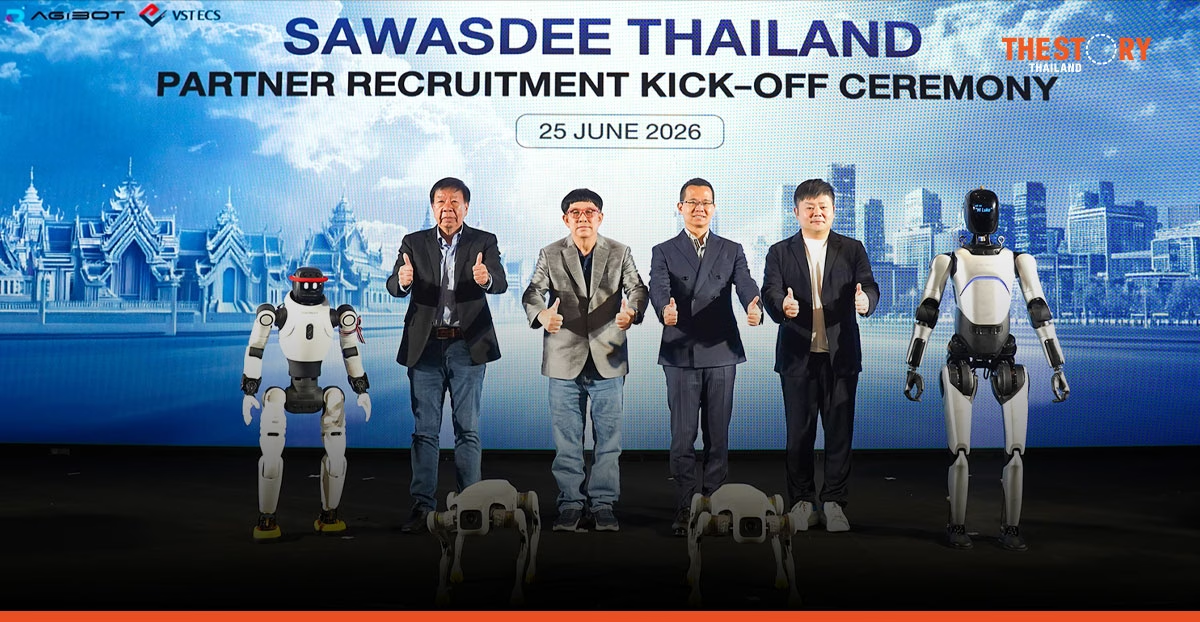
VST ECS (Thailand), an IT distributor in the Asia-Pacific region, has entered into a strategic partnership with AGIBOT, a developer of Embodied AI foundation models and humanoid robotics. The collaboration marks VST ECS’s entry into the deep tech market, focusing on the “Embodied AI” concept which integrates artificial intelligence software with physical robotic systems for corporate and commercial applications.
Somsak Pejthaveeporndej, CEO of VST ECS (Thailand) Co., Ltd., stated that the integration of AI software with physical mechanical systems allows humanoid robots to perform practical business functions. This new portfolio is intended to diversify the company’s long-term revenue base and generate healthier profit margins. The distribution strategy in Thailand targets two primary tracks:
- B2B (Business-to-Business): Targeting IT clients with in-house software capabilities to integrate custom applications onto the physical robot platforms, creating complete solutions for public and private end users.
- B2C (Corporate/Consumer): Providing short-term robot rental options for events, exhibitions, and corporate marketing campaigns, supported by on-site technical showcases.
Market Strategy and Global Embodied AI Trends
During the first one to three years, VST ECS will prioritize its established IT distribution network. Partners will embed their proprietary software onto the hardware to offer specialized business automation. Due to Thailand being in the early adoption stage, the company’s strategy focuses on developing initial local use cases rather than immediate high-volume sales.
Globally, the competition in humanoid robotics is shifting toward advanced Embodied AI execution, human-machine interaction, and system integration. This evolution is supported by underlying technologies including Generative AI, voice recognition, cloud computing, and 5G network infrastructure, making physical AI systems scalable across healthcare, retail, logistics, and hospitality.
Abel Deng, President of the Middle East & Asia Pacific Region at AgiBot Innovation (Shanghai) Technology Co., Ltd., noted that Thailand’s high demand for digital transformation makes it a key target. The partnership aims to deploy AGIBOT’s specialized Embodied AI software layer to transition local enterprises from conventional industrial automation to intelligent, collaborative human-robot workflows.
Labor Integration and the AI Platform Model
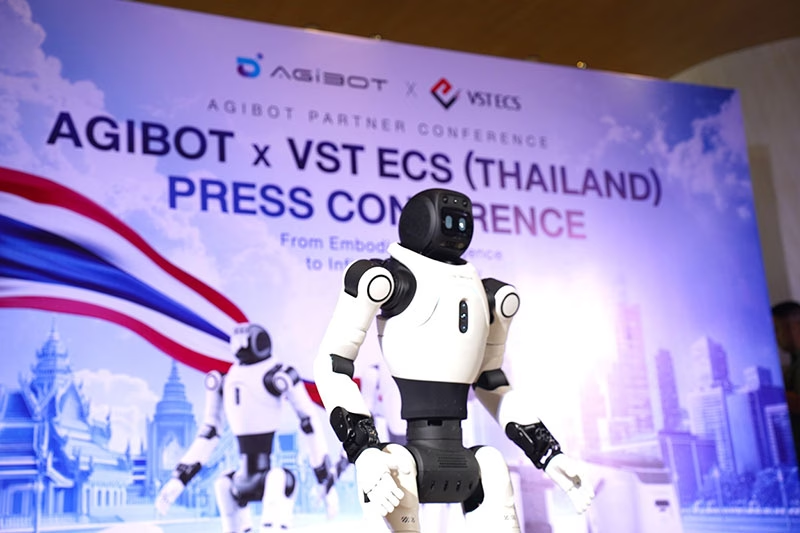
Addressing labor market concerns, VST ECS noted that Embodied AI hardware is designed to automate repetitive, time-intensive operational routines rather than displace the entire workforce. This shift allows human employees to focus on strategic oversight and complex decision-making. Furthermore, the growth of the local robotics industry is projected to create specialized technical roles in AI deployment, software engineering, and technical maintenance.
For commercial operations, enterprises can utilize the flagship AGIBOT A2 Ultra humanoid robot within customer service, retail, and healthcare. The physical AI platform can be programmed to handle visitor reception, product inquiries, promotional updates, and interactive consumer data collection.
The market differentiation for AGIBOT in Thailand centers on moving away from conceptual novelty robotics toward functional Embodied AI business platforms. The system is engineered to integrate into existing corporate IT structures, databases, and third-party software. To accommodate the financial preferences of Thai enterprises, VST ECS will offer flexible, use-case-driven financial models, including Robot-as-a-Service (RaaS) and subscription-based frameworks instead of traditional outright capital purchasing.
Co-Creation and Ecosystem Development
To establish scalable commercial growth, VST ECS is implementing a Co-creation framework with System Integrators (SIs), software houses, and AI developers. Partners are given access to develop custom software, proprietary AI models, and automated workflows directly on the robot’s hardware platform.
Following successful pilot tests with end-users, these joint projects will be analyzed to establish official case studies for commercial expansion. This ecosystem-led distribution model allows localized vertical software solutions to be built on top of the robotic hardware, accelerating market adoption across different industries without relying solely on direct sales channels.
BEYOND Expo 2026 Concludes in Macao, Spotlighting ‘Physical AI’
From Automation to Empathy: Inside BEYOND Expo 2026