
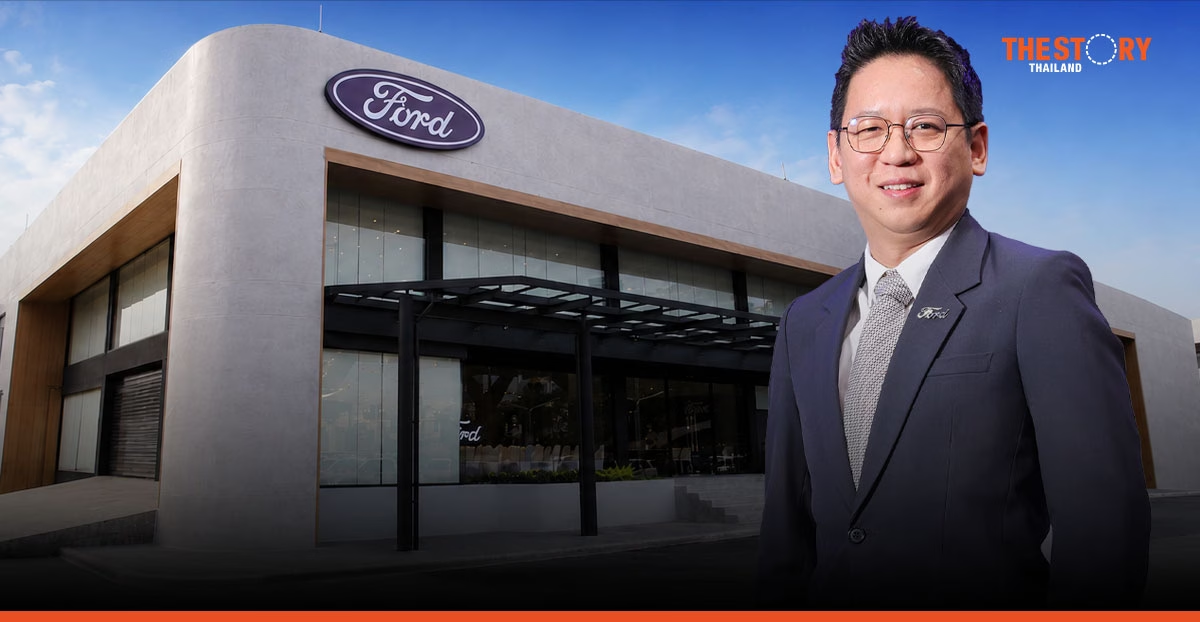
As the automotive industry faces intensifying competition and increasingly complex vehicle technologies, Ford Thailand is shifting its focus toward after-sales services as a core strategy for long-term customer retention. Marking its 30th anniversary of operations in Thailand, the company announced an average annual investment of nearly 500 million baht dedicated to upgrading its dealer network, support systems, and specialized tools.
Surawat Chungsomprasong, Customer Service Director of Ford Thailand, highlighted that while product and pricing competition can be quickly matched by rivals, building customer experience requires a long-term foundation. This approach is guided by the company’s “Treat Customers Like Family” philosophy.
Digitization and On-Demand Services
Data collected by Ford Thailand reveals shifting consumer behaviors, with a significant number of customers seeking to contact or make appointments with service centers between 8:00 PM and 10:00 PM, outside of normal operating hours. In response, the company has integrated its service ecosystem into digital platforms.
Digital Engagement: The Ford App and the company’s LINE Official Account now support 24-hour appointment scheduling and vehicle tracking. The Ford App currently has over 130,000 users, with online service appointments growing at an average rate of 26% annually. Top features utilized by owners include vehicle location tracking, remote locking/unlocking, and remote engine starting.
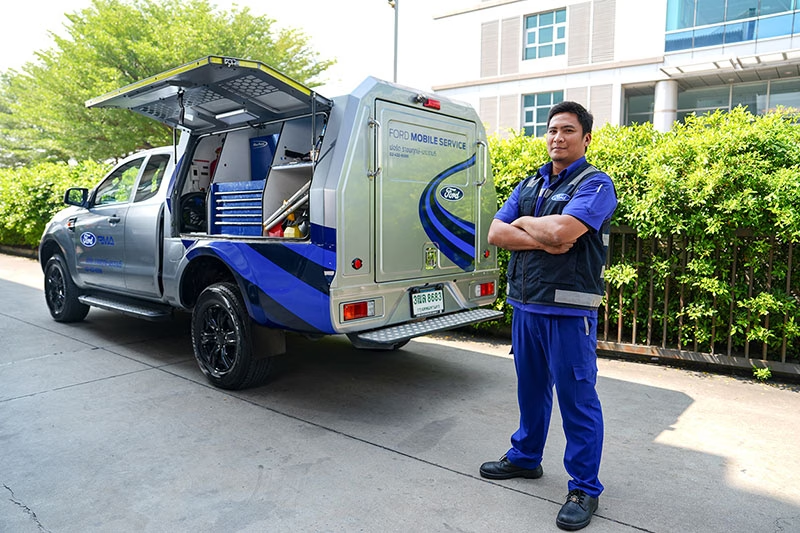
Mobile Support: To serve customers remotely, Ford operates 106 Mobile Service Vehicles (MSVs) across Thailand for routine maintenance, such as oil changes and battery replacements. According to the company, these mobile units can handle approximately 75% of the tasks typically performed at a standard service center.
Predictive Maintenance and Remote Engineering
The integration of connected vehicle technology is altering traditional repair models. When a vehicle detects a fault code or abnormality, data is uploaded to Ford’s cloud system. The company’s call center then initiates a proactive call to notify the owner and schedule service before the issue escalates.
Additionally, Ford has introduced smart glasses technology to facilitate remote repairs. This allows local technicians to connect in real time with Ford service engineers globally, contributing to a 96% “First Time Fix” rate. Consequently, the average Vehicle Off Road (VOR) time—the duration a vehicle remains at a service center—stands at approximately 4 days in Thailand, compared to Ford’s global average of around 10 days.
Infrastructure Expansion and Financial Impact
The introduction of newer, heavier vehicle models has required dealer-level infrastructure upgrades. For instance, servicing the Ranger Super Duty model required dealers to invest in new vehicle lifts capable of handling up to 5 metric tons, alongside specialized tools.
To secure its supply chain, Ford operates a 40,000-square-meter parts distribution center in Samut Prakan province. Holding over 4.3 million parts valued at approximately 1.5 billion baht, the facility serves as Ford’s largest parts warehouse in the Asia-Pacific region and connects to Ford’s global network to source components unavailable locally.
After-sales operations have become a significant revenue stream for the company, accounting for approximately 28% of Ford Thailand’s total revenue and growing at an average annual rate of 5% to 10%.
Currently, Ford Thailand reports a service center retention rate of 83%, while the proportion of existing customers returning to purchase a new Ford vehicle stands at approximately 17% to 18% monthly.