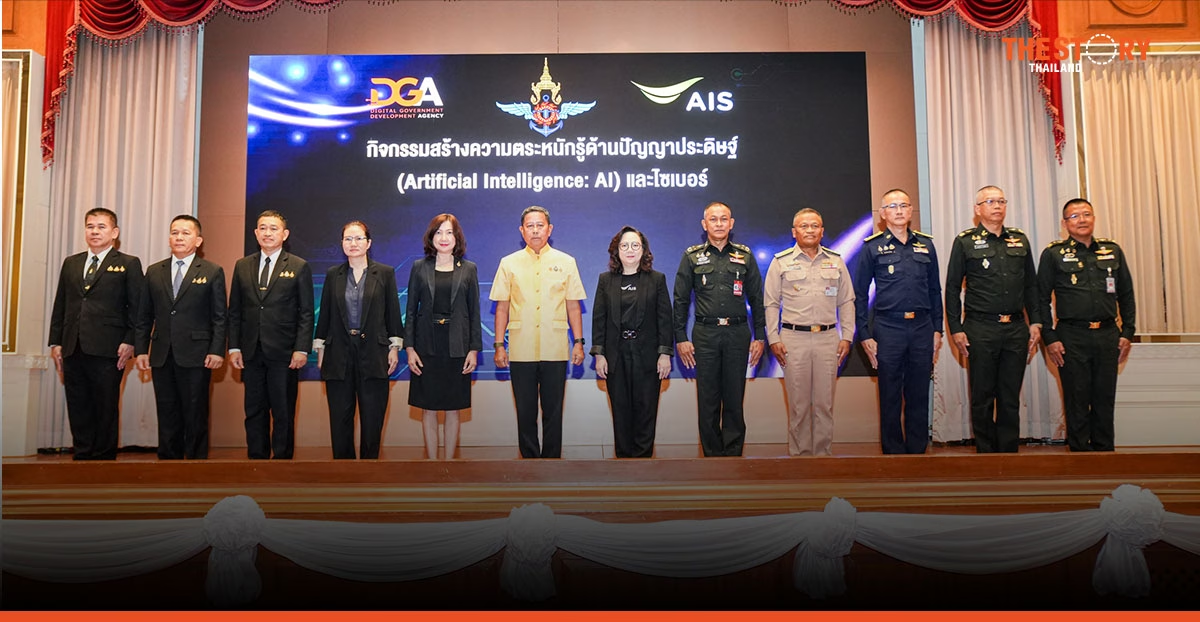
Ministry of Defence teams up with AIS and DGA to equip military personnel with AI literacy, digital skills and cyber resilience as technology takes a growing role in national security
Thailand’s Ministry of Defence is moving to prepare military personnel for an increasingly AI-driven security environment, joining forces with Advanced Info Service (AIS) and the Digital Government Development Agency (DGA) to develop artificial intelligence skills, digital literacy and cyber resilience across the armed forces.
The collaboration centres on the Cyber Resilience and Artificial Intelligence Capability Development Program for Armed Forces Personnel and Their Families, which is intended to create what the ministry calls a “digital-ready force” and strengthen Thailand’s Digital Defense capabilities.
Under the programme, armed forces personnel and government officers will gain access to training through DGA’s learning platform, integrating the AIS Aunjai Cyber: AI Literacy curriculum with the government workforce development framework. Families of military personnel and members of the public will also be able to access the curriculum through AIS Aunjai Cyber.
The programme will move beyond online learning through roadshows at military units in four regions of the country, covering the Royal Thai Army, Royal Thai Navy and Royal Thai Air Force. The focus is not simply on learning how to use AI, but on enabling personnel to recognise cyber threats and apply technology effectively in their work.
AI becomes part of defence readiness
Lieutenant General Adul Boonthamcharoen, Minister of Defence, said technology is playing an increasingly important role in military operations, data management, decision-making and national security as the world moves rapidly into the AI era.
“The world is rapidly entering the AI era. Technology is playing an increasingly important role in operations, data management, decision-making and the national security of every country,” he said.
The ministry is consequently advancing its Digital Defense policy, with personnel development covering physical readiness, knowledge, professional skills and the ability to use technology effectively. It is also strengthening capabilities in data management, situational analysis and strategic decision-making as part of its push towards becoming a Data-Driven Organization and an AI-Driven Organization.
The shift reflects a changing security environment in which AI is becoming more closely connected with how information is managed, situations are analysed and decisions are made. But greater reliance on technology also brings new risks and new forms of threats, making cyber awareness part of military readiness.
Adul said the ministry’s AI workforce development covers different groups, from users and advisers to executives responsible for driving AI adoption and system developers.
The goal, he said, goes beyond making personnel familiar with AI.
“Our objective is not simply to ensure that armed forces personnel are familiar with AI, but to empower them to use AI effectively, recognize cyber threats and apply the technology in practical ways.”
The ministry describes this capability as an “intellectual arsenal” — equipping personnel with knowledge and technological capabilities that can be applied to military missions while preparing them for emerging changes and threats. The approach is expected to support development of the “digital-ready force” envisioned under the ministry’s Digital Defense policy.
From digital infrastructure to people readiness
For AIS, the programme reflects a broader challenge facing Thailand in the AI era: having access to advanced technology alone will not determine whether the country is ready for AI. People also need the skills to understand and use it.
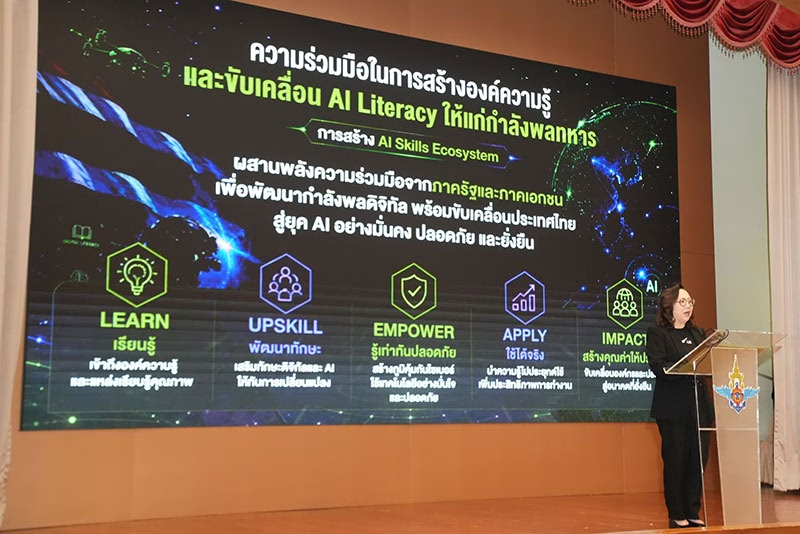
Kantima Lerlertyuttitham, Deputy Chief Executive Officer and Chief Corporate Officer at AIS, said AI is changing economies, societies, the workplace and national competitiveness, making Digital Literacy and AI Literacy important foundations for developing a future-ready workforce.
AIS believes digital infrastructure and human capability need to develop together. Through AIS Academy, the company has been providing opportunities for people to upskill and reskill, with the aim of helping them use AI effectively and navigate technology safely.
The collaboration with the Defence Ministry and DGA will extend that approach into the armed forces and contribute to what AIS describes as an “AI Skills Ecosystem”.
“Our collaboration with the Ministry of Defence and DGA will help lay the foundation for a digital-ready force and build a tangible AI Skills Ecosystem,” Kantima said.
AIS will contribute its experience in digital skills development to the programme, with the broader aim of turning individual readiness into national readiness.
Government learning platform takes AI skills to armed forces
DGA, meanwhile, will bring its government workforce development infrastructure into the collaboration.
Airada Luangvilai, Senior Executive Vice President and Acting President & CEO of the Digital Government Development Agency, said the transition into the digital era ultimately depends on people rather than technology alone.
“AI is playing an increasingly important role in how people work and learn, as well as in national development. However, the heart of the transition into the digital era lies not in technology alone, but in people,” she said.
DGA has been developing government personnel through the Thailand Digital Government Academy (TDGA), with an emphasis on closing skills gaps and providing practical capabilities that can be applied at work.
Under the new collaboration, TDGA will provide Digital Government Skills courses covering AI Literacy, data management and AI ethics. Armed forces personnel will be able to study through the Digital Government Learning Platform from anywhere and receive an online certificate after completing the courses.
Airada said the partnership is intended to go beyond a one-off transfer of AI knowledge and help establish a culture of lifelong learning among military personnel.
By combining the Defence Ministry’s workforce and security mission, AIS’s digital-skills experience and DGA’s government learning infrastructure, the three organisations aim to develop personnel who can use data and technology effectively while remaining prepared for changing risks.
For the Defence Ministry, the longer-term direction is towards becoming an “AI-Ready Defense” organisation, with personnel equipped with the “intellectual arsenal” needed to support missions in a security environment increasingly shaped by data, AI and emerging technologies.
Arincare Telepharmacy debut: FDA-compliant remote care for all pharmacies
SCBX group wins four Techsauce Awards 2026, Accelerating AI-First strategy